2026 Highlights
A look back at the conservation, stewardship, education, and advocacy work that shaped 2026

It is with great sadness that we share the passing of Norman Mease on August 22, 2026. In 1932, Norman’s father purchased 100 acres of land encompassing both sides of Ten Mile Creek. For the past 80 years, Norman has watched over and taken care of this land. Norman was a FoTMC Board Member since its inception in 2014. In September 2025, Norman donated 52 acres of his beloved land to the continued care and oversight of Friends of Ten Mile Creek and Little Seneca Reservoir. His daughter, Mary wrote to us, “I know he was so proud to donate part of the farm to FoTMC.” FoTMC intends to continue to honor her father’s wishes to protect the land and to honor his memory. We look forward to continuing our vigilant and joyful protection of the surrounding forests, wetlands, and waters, and we embrace the responsibilities that come with this new land ownership and look forward to sharing the gift of the land with others.
Norman Mease signing paper to transfer land to FoTMC February 2025
Norman Mease on his Utility farm cart
FoTMC members are always working to keep the Ten Mile Creek area trash-free. As a participant in the “adopt-a-road” program, we regularly haul away trash dumped along West Old Baltimore Road, and our hardworking volunteers also remove a lot of trash from the Creek at the stream ford, including car parts, appliances, and various other items.
On March 21, 2026, folks came out to support the Friends of Ten Mile Creek Adopt a Road effort to remove trash along West Old Baltimore Road. Special thanks to Jay, Anne, John, RG, the Fedota family (John, Henry and Lauren) and Tom and Melane Hoffman for supporting this effort on such a beautiful day. We filled Jay's pickup with a huge amount of trash including a car seat, tire, several containers of used motor oil and the usual bottles, cans and roadside litter.
We will be having another roadside/creek clean-up in the fall. But in the meantime, thank you for picking up trash if you are driving around in the Ten Mile Creek area.
We also keep a watchful eye out for excessive sediment flowing into the creek from the ongoing housing developments in the upper watershed. We have noticed an increase in sediment in the creek as a result of the Creekside at Cabin Branch development, where several hundred residences were recently built. Sedimentation smothers rocky creek bottom habitat where macroinvertebrates, salamanders, and other creek critters live.
Adopt-a-Rustic-Road signage
FoTMC trash clean up
Since 1997, volunteers with Nature Forward have been monitoring two sites on Ten Mile Creek four times a year to assess the health of the creek. One site is on the “mainstem” of the creek just upstream of the ford on West Old Baltimore Road, and the other site is on the tributary that runs alongside West Old Baltimore Road.
Ten Mile Creek Mainstem Index of Biological Integrity
Volunteers determine stream health by collecting small organisms that live in the creek called “macroinvertebrates” and identifying them with field microscopes. Because some macroinvertebrates are more sensitive to pollution and environmental stress than others, they are good indicators of water quality. Each monitoring session receives a stream health score on a scale of 1 to 5. Except during droughts and after big storms, both sites have consistently ranked in the good to excellent range, attesting that Ten Mile Creek is one of the healthiest streams in Montgomery County. For more information on Nature Forward’s Water Quality Monitoring Program, click here. If you would like to help monitor Ten Mile Creek, please contact Cathy Wiss at cjwiss@yahoo.com.
This past May, Cathy Wiss, our lead water quality monitor, reported a benthic data scored a 5.00 – the highest possible score – meaning that the water quality is excellent!
The process to apply for a property tax exemption began in September 2025 when FoTMC filed the required paperwork with the Maryland State Department of Assessment and Taxation (SDAT). Our initial request was denied, though SDAT did not provide an explanation. On March 23, 2026, we went to the Montgomery County Property Tax Assessment Appeals Board in Rockville to present our case for tax exempt status for our new land. The Appeals Board concluded that we would have to file new paperwork based on the merit of FoTMC’s educational activities. We filed that paperwork in July 2026. On August 21, 2026, we finally received approval for the property tax exemption. It has been a laborious and often frustrating process, and we have one more step to go – to get the water quality protection fee removed from our bill. The entire 52 acres is in a category 1 Forest Conservation Easement, and there is virtually no impervious surface area, and the whole purpose of our organization is to protect the Ten Mile Creek Watershed from harmful development impacts that would degrade the health of the forests, wetlands, tributaries, and streams and the quality of water that flows into Little Seneca Reservoir.
The weather was perfect for our April 18th Spring Walk. Our small, but stalwart and persevering group, hiked up and down hills in the Ten Mile Creek Conservation Park, which abuts our new property. We visited wetlands, beaver dams, upland forests and tributaries of Ten Mile Creek and enjoyed the variety of natural beauty. Due to the excessive heat in early April, most of the ephemeral spring flowers such as Bloodroot, Toothwort, and Trout Lily, were finished…but not all. We saw Wild Geranium, Dwarf Ginseng, Pinxster Azaleas, Dogwood, Black Haw Viburnum, Violets, and carpets of Spring Beauty. We enjoyed munching on the twigs of Sweet Black Birch, eating the tips of common Greenbrier, tasting the tops of Pennsylvania Bittercress. We also discovered a new plant species for the Ten Mile Creek flora inventory - Shining Clubmoss at the Skunk Cabbage seepage. Happily, we saw a Box Turtle, then proceeded on to enjoy a lunch break on logs in the old beaver wetland where the uncommon Red-headed Woodpeckers were flying about the snag trees where they live. Afterward, as is custom, Jay and Anne Cinque treated us to food and refreshments at their farm. Come join us on our Fall Forest walk, Saturday, October 24. [Link to Ten Mile Creek Flora Inventory]
Shining Clubmoss (Huperzia lucidula)
Shagbark Hickory (Carya ovata)
Swamp Milkweed (Asclepias incarnata)
Despite the summer’s heat, we’ve had 5 Work/Play days this summer. We have been successful in choosing the least hot days and had the additional cooling benefit of working in the forest and cooling off in the creek. We provided tools – pruners, loppers, shovels, and saws plus hand tools for disassembling the deer stands – and volunteers brought work gloves. Lunch breaks along (and in) the Creek were divine, and the short exploratory hikes into the woods after the day’s work were icing on the cake. We were all diligent about safety and checking for ticks. Happy to report that we found very few ticks!
Here are some of the tasks we are working on:
Path maintenance (keeping the paths passable by clipping back overgrowth)
Removal of deer stands (many of these are in disrepair and are a safety issue)
Keeping the areas around the two sheds free of overgrowth and the roofs free of debris.
Removal of non-native invasive plants, especially along the paths (Barberry & Autumn Olive shrubs).
Clearing the concrete floor of a former shed. (all that remains is a foundation and floor)
So far, we have revived the walkability of an old path along the western boundary of our land; cleared the concrete pad of debris, weeds, and trash so it is now usable no longer an eyesore; pulled countless non-native invasive plants, including thorny Japanese Barberry and Autumn Olive, Privet, and Oriental Bittersweet carving inroads into these invasive thickets.
Of course, there is so much more to do. But this is an ongoing, lifetime-land caring project. With time and dedication, and helping hands, we are making a difference. We will be doing more of these work/play days and hope you can find time to join us and bring a friend.
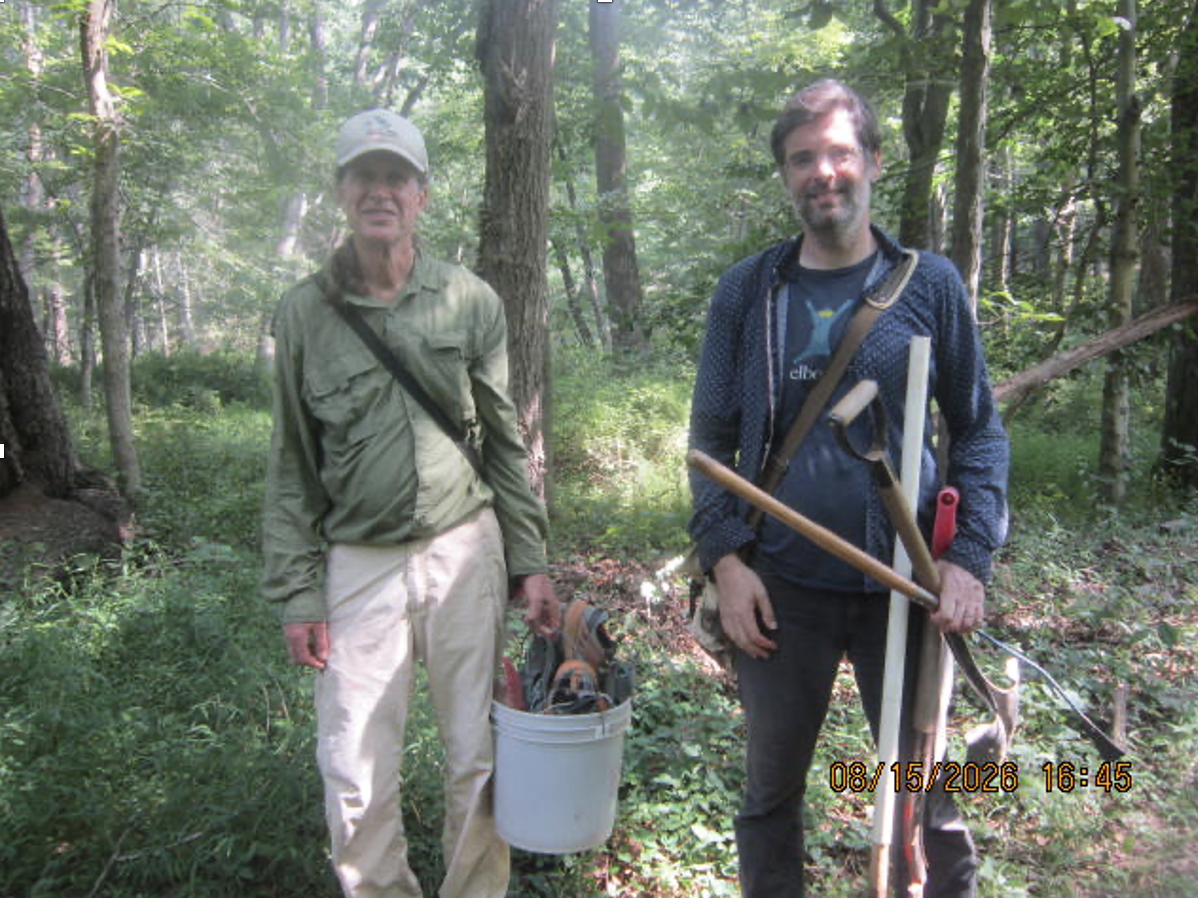
Workers & Tools
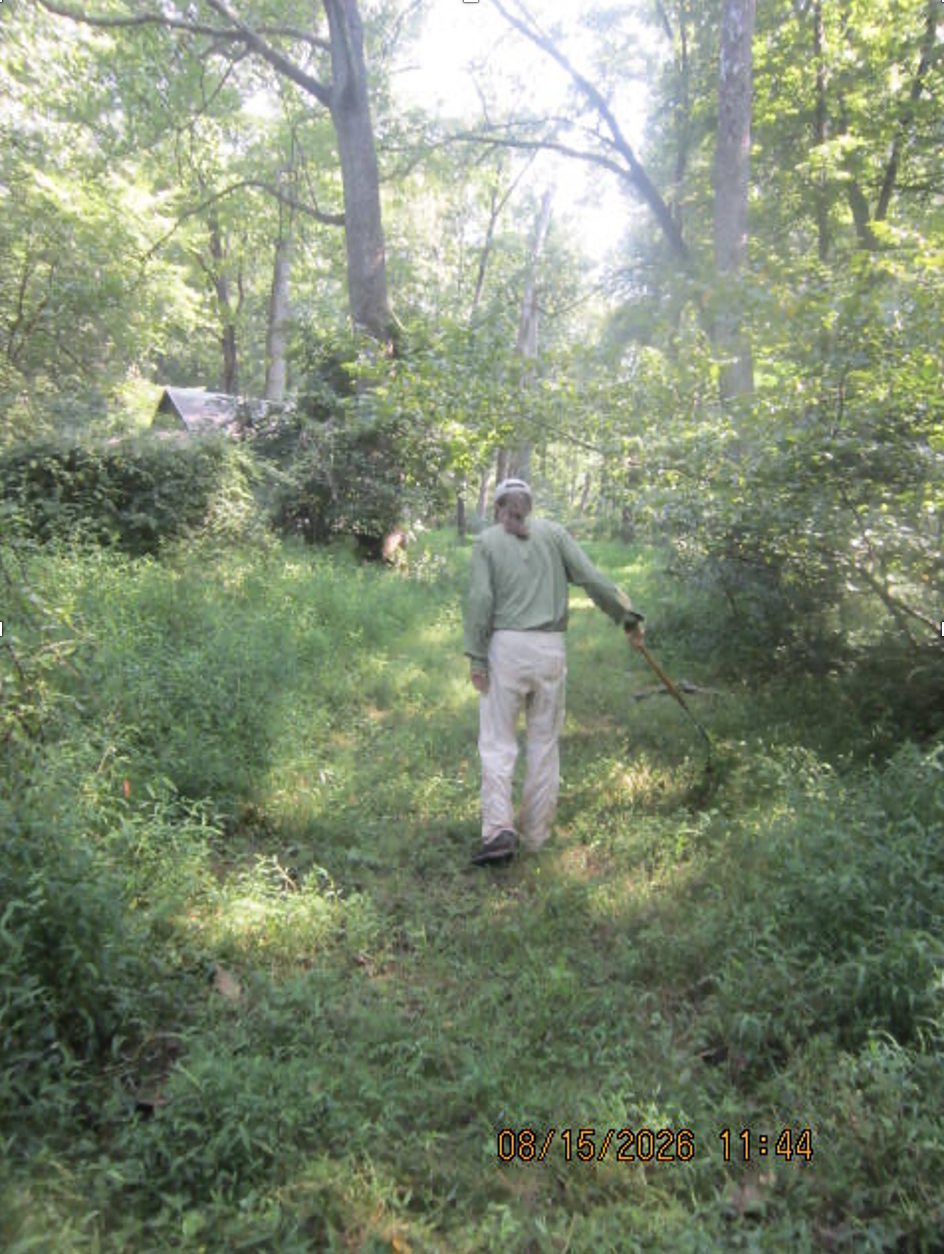
Scything the path
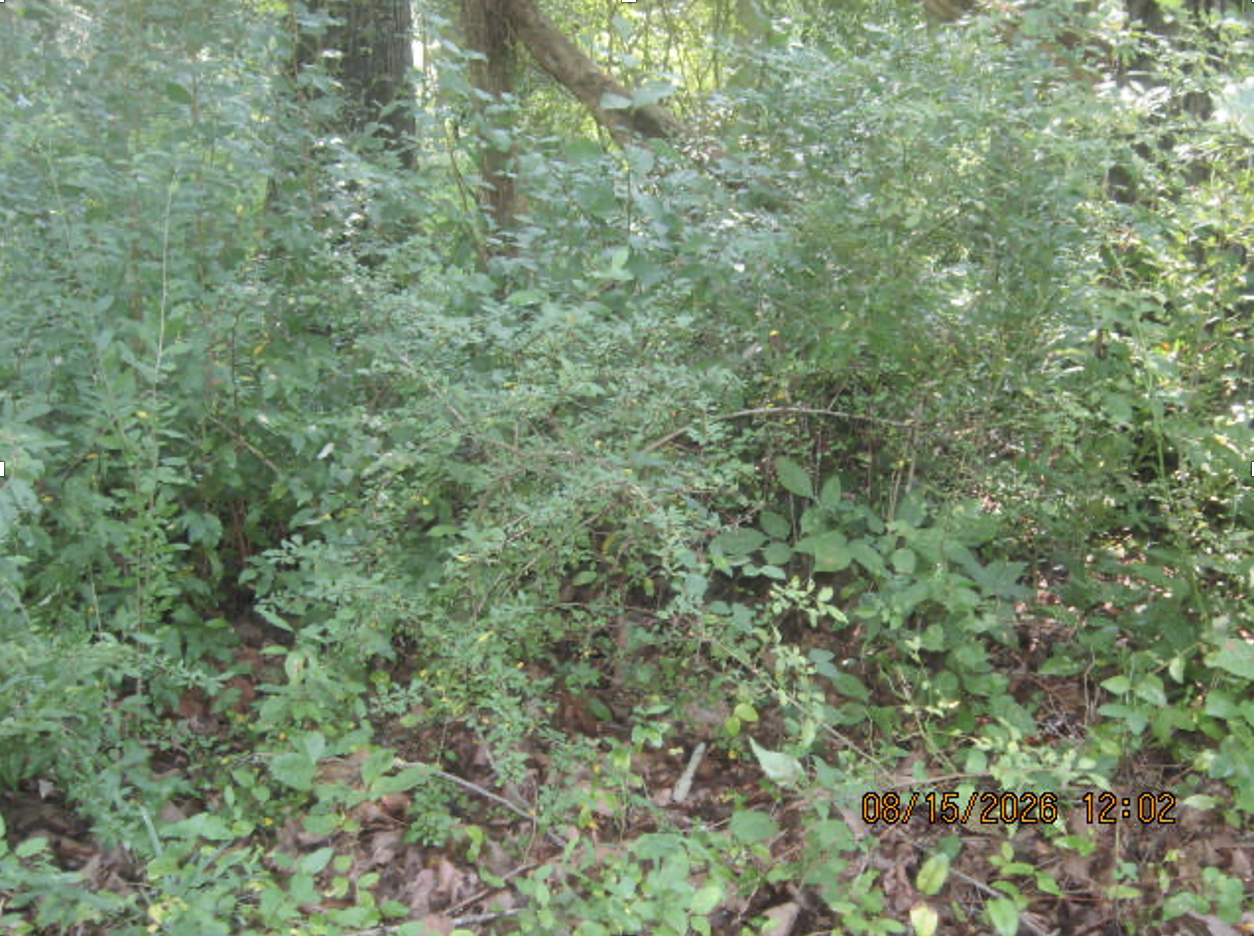
Scything the path
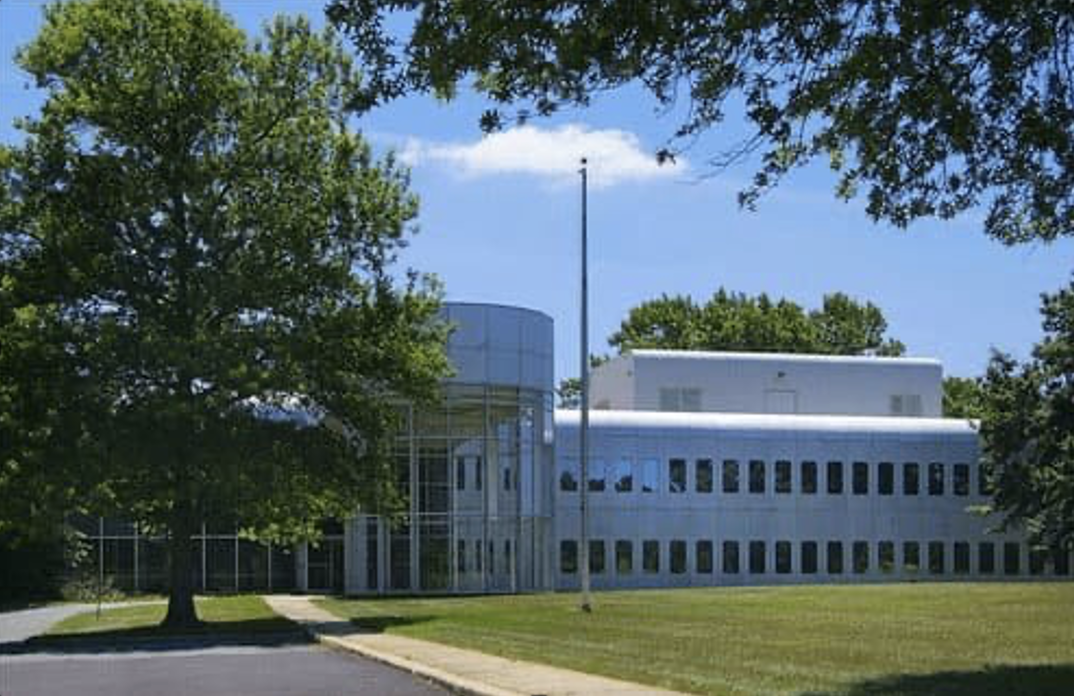
The historic COMSAT building was demolished in April 2026.
FoTMC actively engaged with M-NCPPC (The Maryland-National Capital Park and Planning Commission) Park and Planning staff throughout all phases of the development of the Clarksburg plan, beginning in July 2023, and ending in January 2026, when we testified before the County Council. As guardians of Ten Mile Creek and its watershed, our concerns were (and still are) on protecting the water quality of Little Seneca Reservoir, the DC region’s back-up water supply and recreational and wildlife resource. We provided staff detailed recommendations to minimize the impacts of the Clarksburg plan’s proposed developments on Little Seneca Creek, which flows through the Clarksburg Plan sector area and is the largest stream that flows into Little Seneca Reservoir. Key recommendations included preserving the forests, avoiding the construction of new roadways through forests, parks, streams, stream valleys, and wetlands, and limiting development on the COMSAT property to the existing open spaces and the building footprint.
Unfortunately, the Planning Board and the Council approved a plan that would add major new roads and development in the sector area, especially on the 200 acre COMSAT Property and the Linthicum Family Farm. They also approved the proposal to build a new I-270 interchange and significantly weakened language concerning the protection of Priority Urban Forests.
As a result, the historic COMSAT buildings and forests will be torn down and replaced with dense housing, roads and businesses. Not a single council member expressed any concerns about declining water quality in the Clarksburg Special Protection Area, forest loss or preservation of the historic COMSAT site.
Two bright spots in the plan will be the creation of a small new stream valley park along the Cool Brook Tributary of Little Seneca Creek. This will preserve some forest adjacent to the stream. Plus the cancellation of the MD 355 Clarksburg Bypass. This will assure that the Ten Mile Creek Watershed will not be impacted by a new bypass road. [Link to FoTMC Testimony to County Council, Clarksburg Sector Plan, Jan21,2026]
A property owner on Clarksburg Road, in the Ten Mile Creek Watershed, filed a sewer category change request, which is currently under consideration. The applicant wants to connect to the Cabin Branch sewer system to facilitate building a 40-bed assisted living facility on the 5.7-acre property zoned RE-1. The 2014 Ten Mile Creek Area Master Plan Amendment purposely retained RE-1 zoning – one house per acre – to prevent an increase in impervious surface area in this high-quality watershed. Building this facility would require a zoning change that does not conform to the Master Plan. Despite the intent of the Master Plan and despite the staff’s recommendation to deny the request, the Montgomery County Planning Board recommended approval of the sewer category change to facilitate construction of the assisted living center. The County Executive also recommended denial of the request because it does not conform to the Master Plan. The County Council chose to defer a decision on the request pending a comprehensive review this fall.
The proposed assisted living facility sits on the headwaters of a tributary (LSTM#112) that drains into Ten Mile Creek. If built, this project would result in additional imperviousness and lead to more stormwater runoff into the Creek and degradation of water quality. Furthermore, requests for special exemptions or zoning changes could have a ‘domino” effect, laying the foundation for more intensive development and evermore imperviousness and run-off in the watershed. Whatever happens with the assisted living center proposal will set the foundation for what happens next.
FoTMC will continue to monitor this request and advocate for master plan compliance to protect the watershed from over-development.
This Spring, staff from the Montgomery County Planning Department contacted FoTMC about a meadow planting project in the upper watershed meant to comply with a forest conservation plan as part of the Ashford Woods development. Creating a meadow in this area would require cutting down forest to access the site and to plant and maintain the meadow, as there is no viable path to access the areas with the necessary equipment to create and maintain the meadow. We met on-site with the planners and expressed our disapproval of the proposal to create a meadow by cutting down forests to comply with the forest conservation plan. The planners agreed that this “meadow creation” would end up being far more detrimental to the environment than the hoped for benefits of the plan and cancelled the project.
Our new land gift has enabled us to broaden the use of our land as an outdoor classroom and to provide opportunities for students, as well as the general public, to become better educated about the local flora and fauna and the importance of preserving forest cover to protect water quality. We are currently working on several projects that provide “hands-on” learning opportunities for students to take a deeper dive into the local ecology of the Ten Mile Creek Watershed.
These are some of our ongoing and proposed projects:
Trail maintenance
Non-native invasive plant removal
Setting up fenced deer exclosures to foster native tree seedling and sapling regeneration
Installing nesting boxes for cavity nesting birds (e.g. bluebirds)
Quarterly monitoring of the stream macro-invertebrate populations
Continuing our inventory of the flora and fauna
In addition to these projects, our seasonal watershed walks in the spring and fall are an excellent opportunity for students to broaden their plant identifying skills, and our creek and roadside clean-up events in the spring and fall along West Old Baltimore Road are a great way for citizens to help keep trash and pollutants out of our streams and Little Seneca Lake Reservoir.